The Wire Transfer Is the New Season Ticket: Mapping America's Informal Funding of African Football

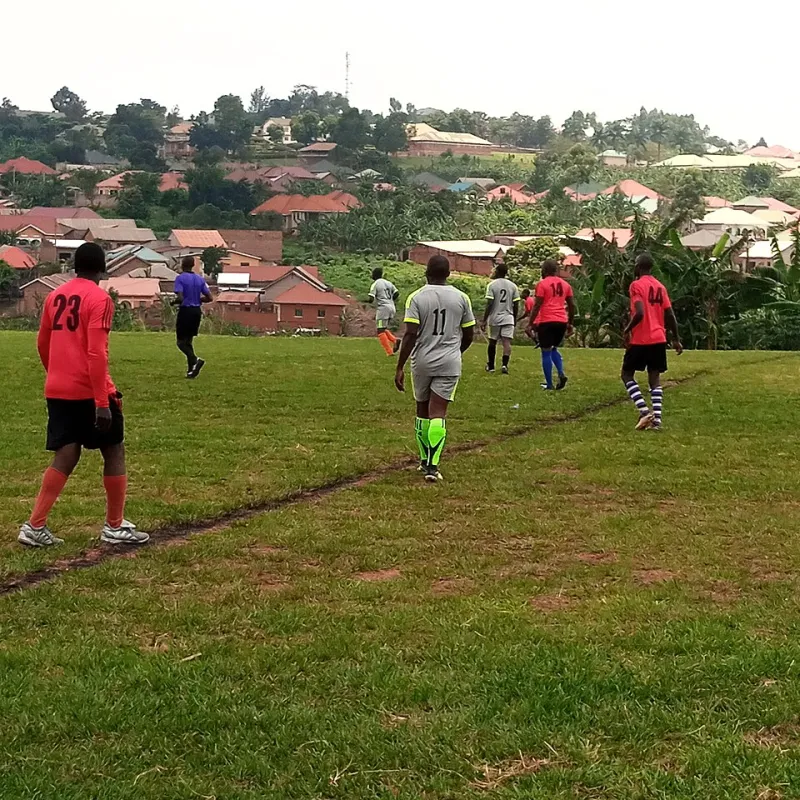
Photo: Werner100359, CC BY-SA 4.0, via Wikimedia Commons
Every month, an accountant in Houston opens his banking app and sends a few hundred dollars to a youth academy in Accra. A nurse in Minneapolis wires money to the amateur club she grew up watching in Kinshasa. Neither transaction appears on any balance sheet, satisfies any sponsorship disclosure rule, or carries a brand logo. Yet collectively, these transfers may constitute one of African football's most stable — and least examined — revenue channels.
The Shadow Ledger
Formal remittances from the United States to sub-Saharan Africa run into the billions of dollars annually, and football-adjacent transfers ride inside that current. Academies in Ghana, Nigeria, Senegal, and Cameroon routinely list "friends abroad" or "supporters overseas" among their funding sources. Club officials describe a pattern: no single donor dominates, but a reliable cluster of $50 to $500 monthly transfers keeps training pitches mowed, kits purchased, and coaches paid.
The economics are striking when compared to commercial revenue. A mid-tier Ghanaian Premier League club might struggle to attract a domestic shirt sponsor worth $30,000 a year. A diaspora network of 60 committed contributors sending $100 a month delivers $72,000 — with no intermediary, no agency commission, and no dependence on a sponsor's marketing calendar.
Patrons, Not Investors
Interviews with diaspora supporters in Texas and Minnesota reveal a consistent mindset: these are patrons, not shareholders. The motivation blends nostalgia, community standing, and obligation rather than any expectation of return. One Houston-based patron, who helps fund a Liberian youth side, describes his role as "the invisible twelfth man with a checkbook."
That framing matters commercially. Because the money arrives as gifts rather than investment, clubs gain flexibility but forfeit structure. There are no shareholder agreements, no reporting requirements, and no mechanism to scale the giving. When a patron relocates, loses work, or simply loses interest, the funding evaporates without notice.
The Formalization Question
The obvious next step — converting informal patronage into structured micro-investment — is harder than it sounds. US securities law draws a bright line between a donation and an investment stake, and community-based schemes that promise returns risk regulatory scrutiny. Diaspora bonds, already used by Nigeria and Ethiopia at the sovereign level, offer one template, but nothing equivalent exists at club scale.
Still, early experiments are emerging. A handful of academies now issue annual reports to overseas supporters, essentially treating a WhatsApp group like a shareholder register. Others have registered US-based nonprofit arms that can accept tax-deductible contributions — a mechanism that turns patronage into a planned giving decision rather than a spontaneous transfer.
For American brands and investors watching African football's growth, the diaspora model offers a lesson in trust economics. These funding flows survive currency crises, coaching changes, and league instability precisely because they are personal. Any formalized version that strips out the human relationship — replacing a patron with a portal — risks killing the very thing that makes the money flow.
The season ticket built American sports finance. The wire transfer may quietly be doing the same for African football. The clubs that learn to honor both relationships — the patron's loyalty and the investor's expectations — will hold a funding advantage no sponsorship deal can replicate.