Whistle for Less: The Labor Economics of Africa's Match Officials
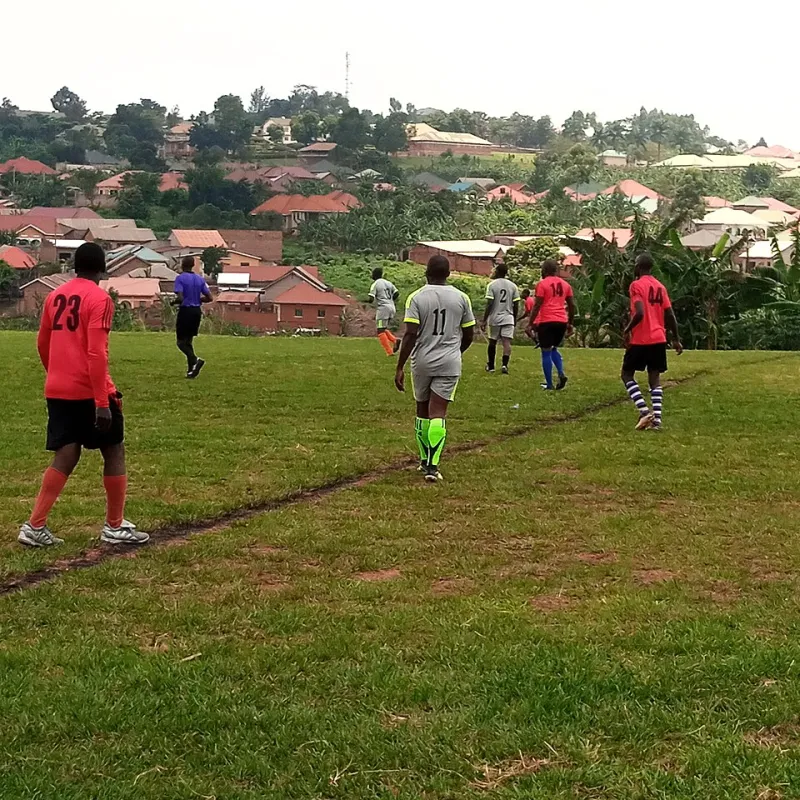
Photo: Douglaseru, CC BY-SA 4.0, via Wikimedia Commons
When Botswana's referee administration announced a roughly $2,000 season-end bonus for its top officials, it made local news. What it also did, inadvertently, was publish a number most African federations prefer to keep quiet: the total annual value of a full season's work from the people who enforce the rules of a multi-billion-dollar sport.
For comparison purposes, consider that a certified referee in an American adult recreational league in a mid-sized US city can clear more in a calendar year through weekend assignments than many elite African officials earn across an entire domestic campaign. The comparison is imperfect, of course — cost of living differs, and match volumes vary. But the underlying economics are not in dispute. Officiating in most African leagues is, at best, a subsidized side job.
The Published Rate Card
Morocco and South Africa sit at the top of the continental pay scale. Referees in Botola Pro and the PSL can earn several hundred dollars per elite appointment, with travel and accommodation covered, and the stronger federations pay on time. That reliability matters more than the headline figure — several West African leagues have historically paid match fees months in arrears, if at all.
Move down the pyramid and the numbers thin out quickly. In parts of sub-Saharan Africa, a top-flight center referee might take home the equivalent of $40 to $100 per match. A referee working a 25-game season at those rates grosses less than $2,500 before expenses — transportation, kit, time off from a day job. The much-discussed $2,000 signing-style bonus in Botswana is therefore not a perk on top of a salary. It is, in effect, the salary.
FIFA tournament appointments complicate the picture. Officials selected for continental or world tournaments receive per-diem allowances and stipends, but the sums are modest relative to what a comparable FIFA-listed referee earns in Europe or the Americas, and appointment income is irregular by design. A referee can spend two years maintaining fitness and passing assessments for a tournament paycheck that lasts three weeks.
The Exit Pipeline
The predictable result is attrition. African football loses capable officials not to scandal but to ordinary opportunity cost. Some leave for coaching education, which offers certifications, structured progression, and — critically in youth-rich markets — private academy work that pays per session. Others simply return to careers in banking, logistics, or teaching, where a decade of service compounds into a pension rather than a folder of match reports.
Federations rarely track this as a business metric, but they should. Every departing referee in their late twenties represents years of sunk investment: licensing courses, fitness programs, assessment travel. Replacing that official costs money; not replacing them costs credibility.
Match-Fixing Math
The labor economics connect directly to the integrity ledger. Match manipulation doesn't require a corrupt referee — it requires an underpaid one with access. Anti-fixing bodies across the continent have repeatedly flagged low compensation as a structural vulnerability, not because poverty excuses dishonesty, but because the risk-reward calculus tilts badly when a season's official earnings can be matched by a single compromised fixture.
The counterargument deserves a fair hearing: well-paid referees in wealthy leagues have also been caught fixing matches. Money alone doesn't buy integrity. But it does buy the things that make integrity easier to maintain — financial stability, professional support, and the psychological distance from a single payday that temptation exploits.
What Semi-Professionalization Actually Costs
CAF has floated semi-professional structures for elite officials: retainers, centralized contracts, performance-based progression. Back-of-envelope, the cost is less daunting than most reforms in the game. Retaining, say, 60 elite officials per federation at $1,500 to $3,000 per month — generous by current standards — runs roughly $1.5 to $2.5 million annually per country. That is less than the broadcast value of a single mid-table club's rights package in several markets, and a rounding error against what match-fixing scandals cost leagues in sponsor confidence and sanction exposure.
Funding models exist. A small levy on broadcast rights, contributions from CAF's commercial partners, or federation budget reallocations could cover it. Morocco's federation has demonstrated that professionalizing officials raises on-field standards, which in turn supports the league's commercial story — cleaner games, fewer controversies, a better product to sell.
The US Lens
American sports offer a useful benchmark here. MLS referees unionized in 2024, securing professional-grade pay and benefits after years of labor disputes. The lesson US soccer learned — slowly, and painfully — is that officiating is labor, and labor that is organized or exits. African federations have a chance to act before the exit becomes the only option left.
The beautiful game's balance sheets in Africa are scrutinized for player wages, transfer fees, and stadium deals. The referee's match fee rarely makes the ledger discussion. It should. Because a league's officiating payroll is not a cost center — it is the cheapest insurance policy on everything else the league sells.