Guarantees, Gates, and Gatekeepers: The Real Economics of African Exhibition Matches on US Soil
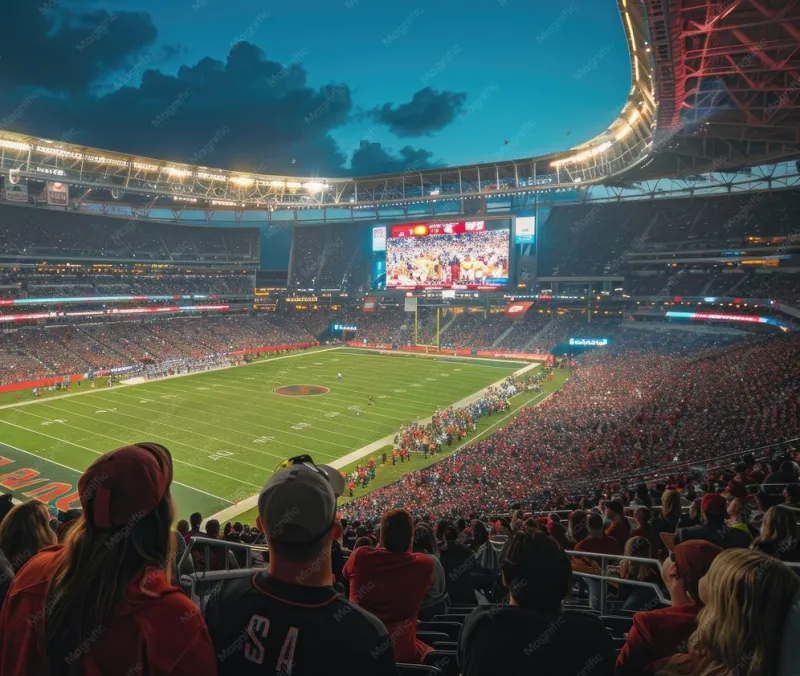
Photo: crowded american football stadium international soccer exhibition match night, via img.freepik.com
The final whistle blows at Mercedes-Benz Stadium, the crowd of 41,000 files out, and the visiting club's delegation is all smiles. But the real accounting begins hours later, in a hotel conference room, where the promoter and the club's commercial director reconcile a spreadsheet that decides whether this summer's US tour was a windfall or a write-off.
Exhibition matches featuring African clubs and national teams have become a quiet fixture of the American summer sports calendar. From New Jersey to Texas, diaspora-heavy metros are hosting Moroccan, Egyptian, Ghanaian, and Nigerian sides for one-off fixtures that rarely make ESPN's highlights but routinely fill sections of NFL-sized venues. The question worth asking — the question this publication always asks — is where the money actually goes.
The Guarantee Game
Nearly every African exhibition played in the United States is structured as a guarantee deal. The promoter pays the visiting club or federation a fixed fee — typically in the low six figures for a mid-tier club, and considerably more for continental heavyweights like Al Ahly or a national team fresh from an AFCON run — regardless of how many tickets are sold.
For the club, the guarantee is pure margin. No travel costs, no risk, no revenue share. For the promoter, it is a fixed cost that must be recouped before a single dollar of profit exists. Industry figures familiar with these deals describe the structure as closer to concert promotion than to league football: the club is the talent, the promoter is the studio, and the gate is everything.
Some deals layer in a bonus structure — additional payments if attendance crosses a threshold, or if the promoter exercises an option for a second match. Others include appearance add-ons for star players, a nod to the reality that a squad without its biggest names sells a very different ticket.
The Gate: A Diaspora Bet
Ticket splits are where these events live or die. In the standard arrangement, the promoter retains the majority of net gate revenue after the venue takes its cut — and American stadium rents are unforgiving. A major NFL or MLS venue can command a five-figure facility fee plus concessions and parking revenue that never touches the event's ledger.
Promoters mitigate this by targeting the diaspora. Nigerian, Ethiopian, Ghanaian, Moroccan, and Egyptian communities in the US are concentrated in specific metros — Atlanta, Houston, the DC suburbs, Minneapolis, the New York–New Jersey corridor — which is precisely where these matches get scheduled. A promoter who can activate church networks, community associations, and ethnic media can put 20,000 to 40,000 butts in seats without spending a dollar on mainstream advertising.
But the model is volatile. Unlike a Premier League club touring the US, whose brand travels across casual fans, an African club's American audience is almost entirely heritage-driven. Visa delays that keep key players home, a scheduling conflict with a community holiday, or simple promoter fatigue in a market that now sees multiple such events per summer can crater the gate.
The Hidden Costs Nobody Photographs
The line items that sink these events are rarely the ones fans think about.
Visas and logistics. Securing P-1 or B-1 visas for a 30-person delegation is expensive and slow, and US consular processing in Lagos, Cairo, and Accra can add unpredictable delays. Chartered or premium-economy travel for a full squad plus technical staff routinely runs into six figures before the first ticket is sold.
Insurance and sanctioning. Friendly matches require sanctioning from relevant federations and, where applicable, clearance through FIFA's match calendar. Insurance for players whose transfer values run into millions is a real cost — and a real negotiation.
Production. American audiences, even diaspora audiences, expect a certain production standard: functioning scoreboard graphics, halftime entertainment, broadcast or streaming provision. Promoters who skimp here feel it in word-of-mouth for the next event.
Why Keep Betting?
Given the risk, why do promoters keep coming back? Three reasons.
First, the guarantee model caps the downside for the club but not the upside for the promoter — one sold-out match in a 60,000-seat stadium can erase two disappointing ones. Second, sponsorship is growing. Telecom, money-transfer, and airline brands targeting African diaspora consumers have become increasingly willing to attach their names to these fixtures, providing revenue that does not depend on weather or walk-up sales. Third, and most strategically, promoters are building relationships. A club that tours successfully in 2025 is a club that will license its brand, return for a preseason camp, or route its American friendlies through the same partner in 2026.
There is also a longer play. As African football's commercial profile rises — through AFCON broadcast growth, the Club World Cup's expanded format, and the steady flow of African talent through European and now American leagues — the promoters positioning themselves today are buying optionality on a market that is still priced like an emerging one.
The Bottom Line
The scoreboard at an African exhibition in America tells you nothing about the business underneath it. The real score is kept in guarantee letters, ticket-split percentages, and visa receipts. And for now, the people writing those documents are betting that the diaspora's appetite to see its heroes in person — once a year, in their own city — is a durable asset.
So far, the evidence suggests they are right. Just not every summer, and not every city.