Concrete, Debt, and Empty Seats: The Financing Puzzle Behind Africa's Stadium Spending Spree

Photo: Shixart1985, CC BY 2.0, via Wikimedia Commons
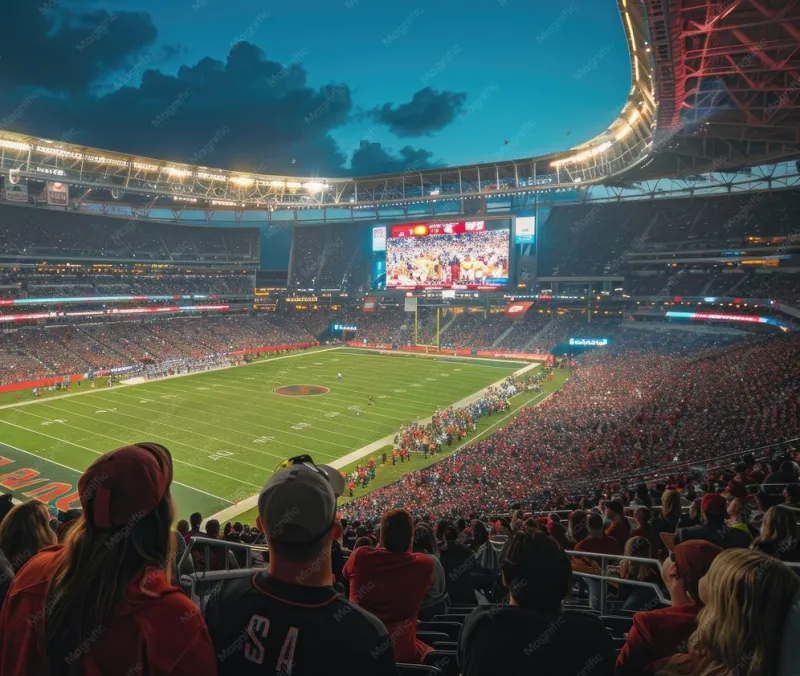
When the final whistle blew at recent Africa Cup of Nations tournaments, the photographs told two stories at once. In one frame: gleaming arenas with cantilevered roofs, LED ribbon boards, and broadcast-quality turf. In the other: vast stretches of vacant plastic seating, visible to every television viewer on three continents.
For a US audience accustomed to stadium debates over taxpayer referendums and team relocations, Africa's building boom presents an unfamiliar financing anatomy. There is rarely a local tax vote. There is almost never a committed anchor tenant with a 30-year lease. What there is, instead, is sovereign borrowing — and a growing queue of foreign capital wondering whether these half-filled cathedrals are distressed assets or untapped franchises.
The Construction Ledger
The dominant financier of Africa's modern stadium wave has been Chinese state-linked lending, typically structured as concessional loans tied to construction contracts with Chinese engineering firms. Venues in Gabon, Equatorial Guinea, Cameroon, and Côte d'Ivoire followed variations of this template: the loan is issued through an export credit arrangement, the contractor is selected before the first shovel goes in, and repayment terms stretch over decades at below-market rates.
The appeal for host governments is speed. AFCON deadlines are immovable, and a tournament-compliant stadium cannot be value-engineered into existence in eighteen months through conventional procurement. The trade-off is opacity. Because much of this debt sits on sovereign balance sheets rather than in stadium-specific entities, nobody — not local journalists, not continental governing bodies, not prospective investors — can say with precision what any single venue costs to service annually.
That opacity matters now more than ever. Several host governments that financed tournament infrastructure have since faced debt distress, and stadiums — revenue-generating on perhaps twenty days a year — sit low on any finance ministry's repayment priority list.
The Naming-Rights Mirage
In the American model, a stadium is a media product before it is a building: naming rights, sponsor lounges, founding-partner placards. In Africa, the naming-rights market has largely failed to materialize.
The reasons are structural rather than cultural. Most AFCON venues lack a permanent tenant whose season generates the 25-plus annual events that justify a seven-figure annual sponsorship. A naming-rights buyer is purchasing impressions and hospitality inventory, and a stadium hosting six meaningful matches a year simply cannot deliver either at scale. Where deals have been struck, they've often involved telecoms or state-owned enterprises — partners whose own balance sheets have since tightened.
The result is a portfolio of anonymous arenas: technically world-class, commercially silent.
Why American Capital Is Circling
Here is where the story becomes interesting for US readers. American infrastructure funds and sports-adjacent private equity have begun evaluating African stadium projects not as trophy assets but as yield plays — long-duration, hard-currency-adjacent infrastructure in markets where young populations are growing faster than entertainment supply.
The logic runs like this: a city with two million people and no modern concert venue represents a latent events market. A stadium already built — the sunk cost absorbed by a government — can be recapitalized. The investor injects operating capital, professionalizes concessions and ticketing, books non-football events, and takes a share of revenue. For governments under fiscal pressure, converting an unusable asset into a revenue-splitting partnership beats watching it decay.
Early signals suggest this is more than a thesis. US firms with experience in Latin American and Southeast Asian venue management have made exploratory visits to West and East African markets, drawn by the same demographic math that has American media companies investing in African streaming and telecoms.
Could the American Model Actually Translate?
The tools of US stadium finance face obvious friction when exported.
Personal seat licenses — the one-time fees American fans pay for the right to buy season tickets — presuppose a fanbase with disposable income and a multi-decade commitment to a tenant. In most African league markets, per-match attendance revenue is thin, and season-ticket culture barely exists outside a handful of clubs in Morocco, South Africa, Egypt, and Tunisia.
Premium suites require corporate clients with entertainment budgets. Africa's corporate base is growing — banking, telecoms, and fintech in particular — but the density of suite-worthy clients within driving distance of a Lagos or Accra stadium remains a fraction of what a Dallas or Nashville venue commands.
Tax increment financing is a non-starter in most jurisdictions, since it depends on municipal bond markets and property-tax capture mechanisms that don't function the same way.
And yet, elements do translate. Revenue-splitting operating concessions — the model used when American firms run stadiums in Brazil and India — requires none of those preconditions, only professional management and a credible events calendar. Mobile-money ticketing, which African markets have leapfrogged the US on, could make dynamic pricing viable at attendance levels that would bankrupt a box office running on cash.
The Bottom Line
The next phase of Africa's stadium story won't be about construction. The concrete exists. It will be about capital structure: who refinances the debt, who buys the operating rights, and whether a venue that costs a fortune but earns almost nothing can be repositioned as a 300-day-a-year asset.
For American investors raised on the playbook of buying distressed infrastructure and adding professional management, African stadiums are the largest unpriced asset class in global football. The seats are empty. The question is whether that's a liability — or the entry price.