The Campus Detour: How NIL Money and US Scholarships Rewired Africa's Route to the Pros
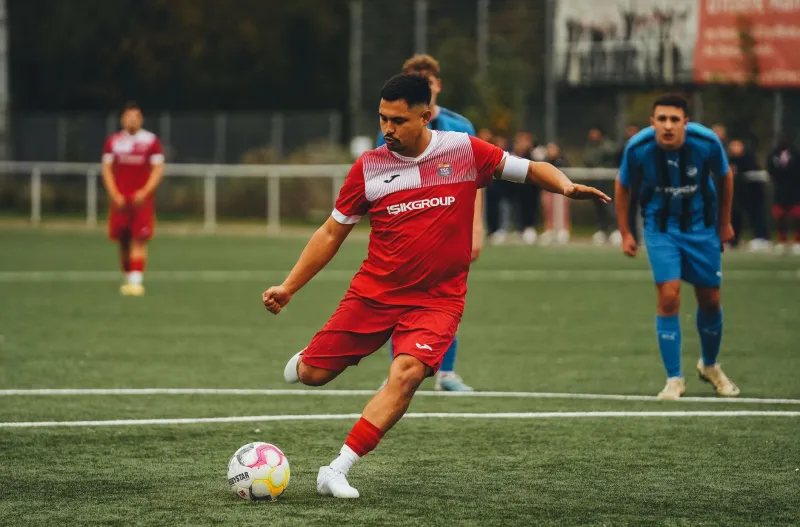
Ask a European scout where African talent goes at eighteen and the answer is a familiar one: a Belgian or Portuguese reserve side, a Scandinavian first team, a Turkish project. Ask where it went in 2024 and the answer increasingly includes a place that never appears on a transfer ledger — an American university with a Division I soccer program, a scholarship, and a name-image-likeness budget.
This is the argument of this piece: the US college system is now a genuine pathway into professional football, and it is quietly competing with the transfer market that African clubs depend on.
The Pipeline No One Modeled
The mechanism is simple. American college soccer has, for decades, offered international players scholarships covering tuition, housing, and meals — a package worth tens of thousands of dollars annually at a mid-tier private institution and considerably more at a flagship state school. What changed is that those players can now earn from their own commercial value while enrolled.
Name-image-likeness money arrived unevenly. It is concentrated in football and basketball at major programs, and soccer's share is modest compared to gridiron. But modest in American terms is transformative in the terms of a young player from Accra or Dakar who has never held a monthly contract.
Add in the structural shifts: relaxed transfer rules that let athletes move between programs without sitting out, expanded junior college and NAIA routes, and a wave of American clubs and MLS academies producing players who arrive on campus already scouted and ranked. The result is a system with a scouting network, a development environment, and a payment structure — everything an academy is supposed to have, minus the academy label.
What a Scholarship Actually Covers
Strip out the romance. A full scholarship at an American university covers tuition, fees, accommodation, and a meal plan. At a large public institution, that package can be valued well into the tens of thousands of dollars a year. Add a small NIL arrangement from a local collective or a camp business, and the annual value can exceed what a mid-table European club would pay a teenage reserve, without the risk of a work permit or an unpaid month.
That is the pitch. It does not require an agent to learn a new continent's immigration rules, and it does not require a family to accept that their son will be alone in a rented flat in a foreign city at seventeen.
The Solidarity Gap
The problem, from an African club's perspective, is that this pathway runs outside the compensation architecture the sport has built.
FIFA's training compensation and solidarity mechanism is designed to pay the clubs that developed a player. It works because the player moves between federations in a documented transfer, and the payment obligations attach to the transaction. A player who leaves an African academy for a university is not transferred. He is admitted. There is no international transfer certificate, no fee, no solidarity contribution, no training compensation.
An academy that spent eight years and thousands of dollars developing a midfielder gets nothing when he enrolls in Ohio. That is not a loophole anyone designed; it is a gap between two systems that were never meant to intersect.
A Rival, a Leak, or a Revenue Line?
Here is where African clubs must make a strategic decision, and most are making it by default.
Treated as a leak, the college route looks like theft — a free extraction of developed talent by an American institution that will never pay a fee. That framing invites a defensive response: contracts with minors, restrictive exit clauses, and pressure on families. It is also unenforceable across borders and reputationally costly.
Treated as a rival, the college route becomes a competitor for the same eighteen-year-olds, and the correct response is to compete: better facilities, clearer professional pathways, transparent earning potential, and honest communication about the odds. Most African academies cannot outspend a Big Ten program, but they can offer something a university cannot — proximity to first-team football and a route to a European work permit.
Treated as a business, the college route becomes a market. A handful of African academies have started to experiment: structured partnerships with American universities, formal scouting agreements, and — most interestingly — paid identification services, where a club is compensated for referring and preparing a player who ends up on campus. These arrangements are small, informal, and legally murky, but they acknowledge a truth that the sector resists: if players are going to leave, the clubs that developed them should be at the table when the deal is done.
What Would Make the Pipeline Fair
Three changes would materially rebalance it.
First, transparency. American programs should be required to disclose the provenance of recruited international players, and the NCAA's amateur framework should abandon the fiction that a player who was developed by a professional club in Africa is somehow unaffiliated.
Second, a voluntary compensation compact. US college programs and their conferences could establish a development contribution on international recruits from countries with recognized academy structures — a modest, one-time payment that costs an athletic department less than a single recruiting trip and changes the calculus entirely for a cash-strapped African club.
Third, and most importantly, better information on the African side. Most families signing a college scholarship offer have no reliable way to value it against a European contract. Federations and player unions could publish standard valuation guidance. That is a public service, not a negotiating tactic.
The Honest Verdict
The campus detour is not a scandal. For many young African players it is a materially better outcome than a cold move to a European second division, and it deserves to be described that way.
But it is a structural change in how African football is financed, and the sector has been slow to name it. Talent that once generated transfer fees now generates tuition waivers. That shift shows up nowhere on a club's balance sheet, and that is precisely why it matters.