The Unsold Nameplate: Why Africa's Stadium Boom Hasn't Produced a Naming Contract
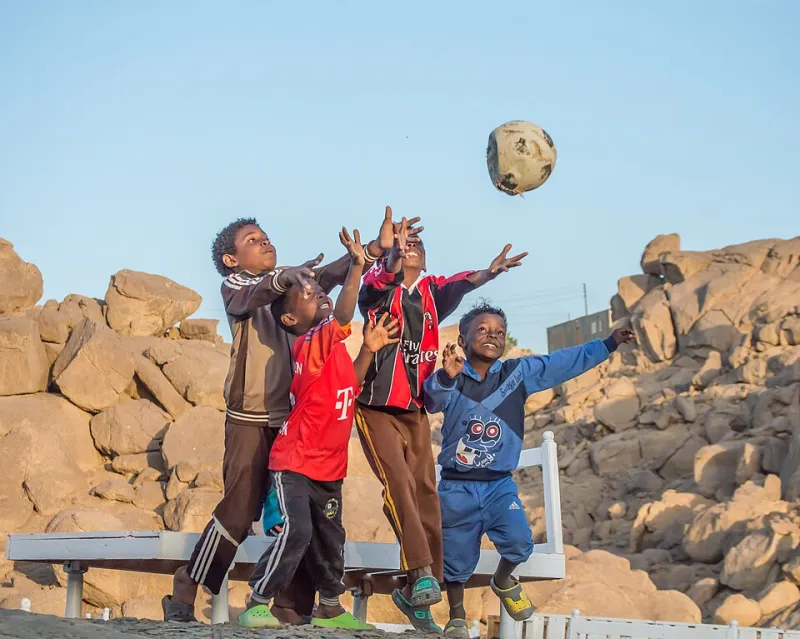
Photo: Ahmed Emad Hamdy, CC BY-SA 4.0, via Wikimedia Commons
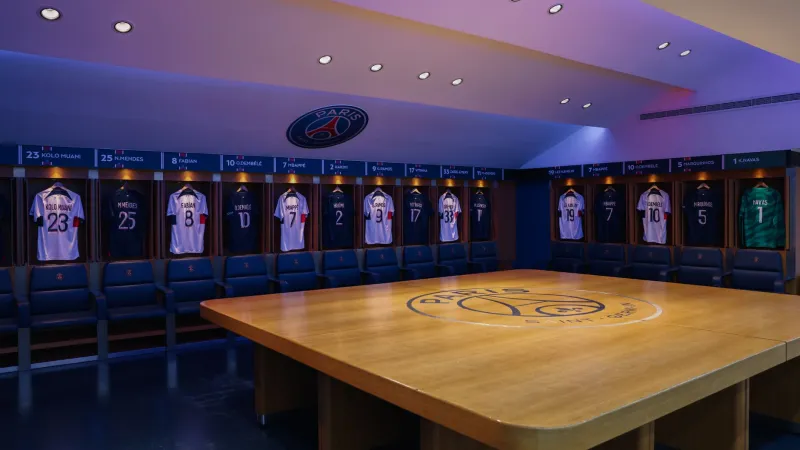
Walk into almost any major new stadium in Africa and you will find the same anomaly. The architecture is world-class, the capacity is measured in tens of thousands, the floodlights are broadcast-grade. And the building has no commercial name.
Morocco's Grand Stade Hassan II, rising outside Benslimane at a scale intended for a World Cup final, will open without a naming partner unless something changes. Senegal's Diamniadio, Ivory Coast's Ebimpé, Cameroon's Olembe, Tanzania's Benjamin Mkapa — all are venues with visible, sellable naming inventory. Very few have converted that inventory into a signed, multi-year contract.
The American Playbook, Priced Out Loud
Compare the United States, where a stadium name is a financial instrument. A venue naming deal in a major American market typically runs 15 to 20 years and is priced in the tens of millions of dollars annually for the largest buildings, with smaller MLS and USL venues transacting in the low seven figures per year. The sponsor is not buying signage. The sponsor is buying 20 years of broadcast impressions, category exclusivity, and association with a civic landmark.
That model works because four conditions are met: the venue is controlled by a single commercial entity, the term is long enough to amortize, the audience is measured, and the naming right is unencumbered.
African venues tend to fail at least three of the four.
What Actually Blocks the Deal
Ownership and procurement. Most large African stadiums are public assets, held by municipalities, ministries, or state agencies. Selling a name is not a marketing decision; it is a procurement decision, often requiring tender processes that were never designed for 20-year commercial commitments. The sponsor is not negotiating with a club. The sponsor is negotiating with a government.
Duration risk. An American sponsor will accept a 20-year term because the political and legal environment allows a 20-year contract to be enforced. An African rights holder offering the same term faces a rational objection: what happens after the next election? Deals that cannot survive a change of administration are priced accordingly — which usually means not at all.
The valuation vacuum. There are almost no credible African comparables. A valuation agent asked to price the naming rights of a 40,000-seat West African venue has no transaction history to anchor against, so the number becomes arbitrary and the negotiation collapses.
Clean title. Naming rights sit on top of a bundle of underlying rights — broadcast, signage, hospitality, matchday. Where those rights are fragmented between a stadium authority, a club, and a league, the naming right may technically exist but cannot be sold without creating conflicts.
Sponsors do not walk away because the price is too high. They walk away because the asset cannot be cleanly defined.
Ambush and exclusivity rules. Continental and global competition regulations restrict what a venue-bound sponsor can display during sanctioned matches. A bank that pays for a stadium name may find itself unable to activate at the biggest fixtures played inside it — a fatal flaw that African rights holders frequently discover mid-negotiation.
Who Could Realistically Close First
Not every club starts from zero. A short list of realistic candidates has emerged, defined by three traits: documented control of the venue beyond a single political cycle, an existing commercial partner with category appetite, and a broadcast product that produces measurable exposure.
- South African clubs operate with the most mature sponsorship market on the continent. Existing bank and telecom relationships already function as quasi-naming partners in the public mind; formalizing those into a contracted venue right is a short step.
- Egyptian giants carry the largest domestic broadcast audiences in Africa. Their obstacle is stadium ownership, not commercial demand — a lease structure with a long horizon would unlock the conversation.
- Moroccan clubs and the new national venues benefit from a state program with an explicit interest in monetizing infrastructure built for international tournaments. The political will exists; the contracting template does not.
- Privately held East African and West African clubs that own or hold long leases on their grounds are the cheapest path to a first transaction, even at a seven-figure total rather than a seven-figure annual.
The Paperwork Before the Paycheck
Any African rights holder serious about selling a name should complete four tasks before approaching a buyer.
First, map the rights chain in writing — venue control, matchday signage, broadcast visibility, hospitality inventory, and the sanctioning-body rules that override all of them. Second, build a rudimentary valuation model from broadcast minutes, attendance, and estimated media value rather than aspiration. Third, structure the term to survive political change, with step-in rights, escrowed payments, or an anchor tenant guarantee. Fourth, price in activation, because a sponsor who cannot use the name will not renew.
None of this requires a new stadium. It requires a contract file, which is considerably cheaper.
The Cost of Waiting
The window matters because the venue boom is finite. Stadiums built for tournaments tend to carry their construction debt for two decades while their naming inventory ages. The first African club to close a properly structured, bankable venue deal will not simply earn a fee. It will create the comparable that every valuation agent on the continent has been waiting for.
Until then, the most valuable signage in African football remains the blank space above the gate.